

 中文简体
 English
 Español



Understanding the Synthetic Yarn Supply Chain
Synthetic yarn sourcing rarely fails because a factory cannot spin fiber. It fails because buyers do not know which stage of the supply chain they are actually negotiating with. A trading company, a spinning mill, and a fully integrated yarn manufacturer can all quote the same specification sheet, yet the lead time, price stability, and quality consistency behind those quotes are completely different. Before comparing prices, a buyer needs to understand where polymer chips are melted, where filaments are drawn and textured, and where quality inspection actually happens.
Most synthetic yarn used in apparel, home textiles, and technical fabrics starts as polyester or nylon chips. Those chips are extruded into continuous filament, then either sold undrawn as partially oriented yarn or further processed into textured yarn for stretch and bulk. A buyer searching for premier yarn wholesale options needs to confirm whether the supplier owns extrusion capacity or simply repackages output bought from a third party, because that single fact changes color consistency, denier tolerance, and how quickly a reorder can be filled during peak season.
Practical note: Ask any candidate supplier for their extrusion capacity in tons per month and their current utilization rate. A mill running near full capacity with a long backlog is not necessarily a bad partner, but it changes how far in advance you must place orders.
Lead time behavior also differs by season in ways that catch first-time buyers off guard. Many mills schedule extrusion and texturing lines around regional holiday shutdowns, and a supplier that quotes a four-week lead time in spring may need six to eight weeks for the same order placed just before a major shutdown period. Building a rough production calendar with each shortlisted supplier, rather than assuming lead time stays flat year round, prevents a scheduling surprise from turning into a missed shipping window for a downstream customer.
Polyester DTY vs Polyester POY: Which Yarn Type Fits Your Production Line
The difference between drawn textured yarn and partially oriented yarn is one of the first technical filters a buyer should apply. Partially oriented yarn is an intermediate product with lower molecular orientation, used mainly as feedstock for further draw texturing or draw twisting. Drawn textured yarn has already been drawn and false-twist textured, giving it bulk, stretch, and a hand feel suited to knitting and weaving without further processing.
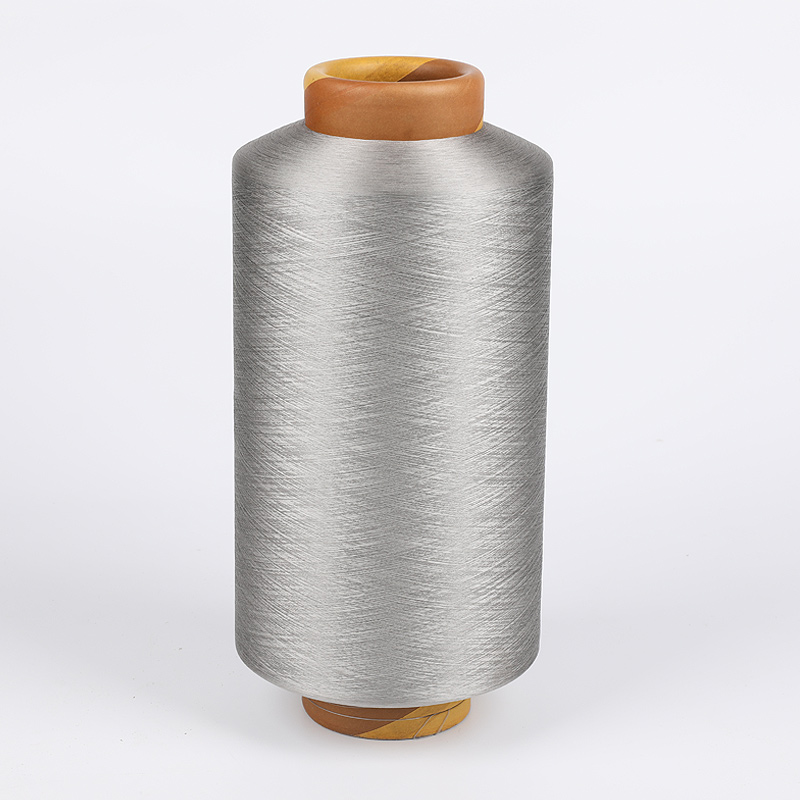
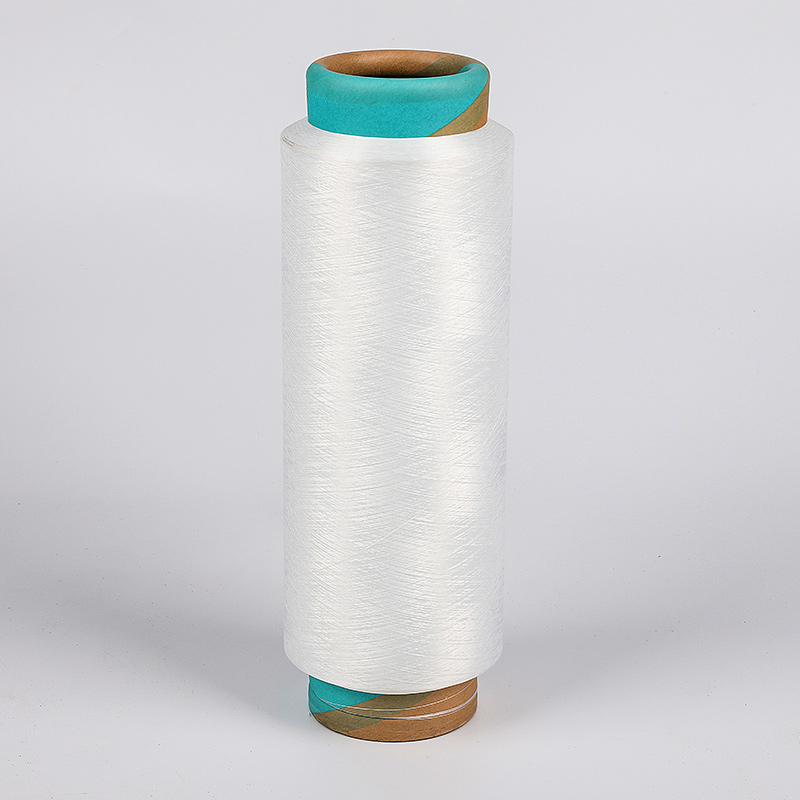
Textured polyester yarn wound on cones, ready for knitting or weaving.
Buyers who plan to run their own texturing lines usually want partially oriented yarn because it is cheaper per kilogram and gives them control over the final twist and bulk characteristics. Buyers who need finished yarn ready for fabric formation, without investing in texturing machinery, should specify drawn textured yarn directly. Mixing up the two in a purchase order is one of the most common and costly mistakes in bulk sourcing, since the two products are not interchangeable on a knitting machine.

Denier and filament count matter just as much as the drawn versus undrawn distinction. A 150D/48F yarn behaves differently on a circular knitting machine than a 150D/144F yarn, even though the overall denier is identical, because filament fineness controls softness and cover. When requesting a quote through a general wholesale yarn near me search, always attach the exact denier, filament count, and luster requirement (bright, semi-dull, or full-dull) rather than relying on a generic product name, since generic names vary between suppliers.
Spinning speed and draw ratio also influence how a yarn performs downstream, even when the label denier matches. Filament spun at a higher take-up speed tends to carry slightly different crystallinity than filament spun slower, which in turn affects dye uptake rate and shrinkage behavior during heat setting. A supplier that can explain, in plain terms, why their process produces a particular shrinkage figure is generally more reliable than one that simply states a number without being able to describe the process behind it.
Recycled Yarn Manufacturing and Sustainability Considerations
Recycled polyester yarn is produced primarily from two feedstocks: post-consumer plastic bottles and post-industrial fiber or fabric waste. The two feedstocks yield different quality profiles. Bottle-derived recycled chips generally produce more consistent viscosity and are easier to spin into uniform yarn, while textile-waste-derived recycled yarn can carry more color and polymer variability unless the mill runs a rigorous sorting and filtration process.
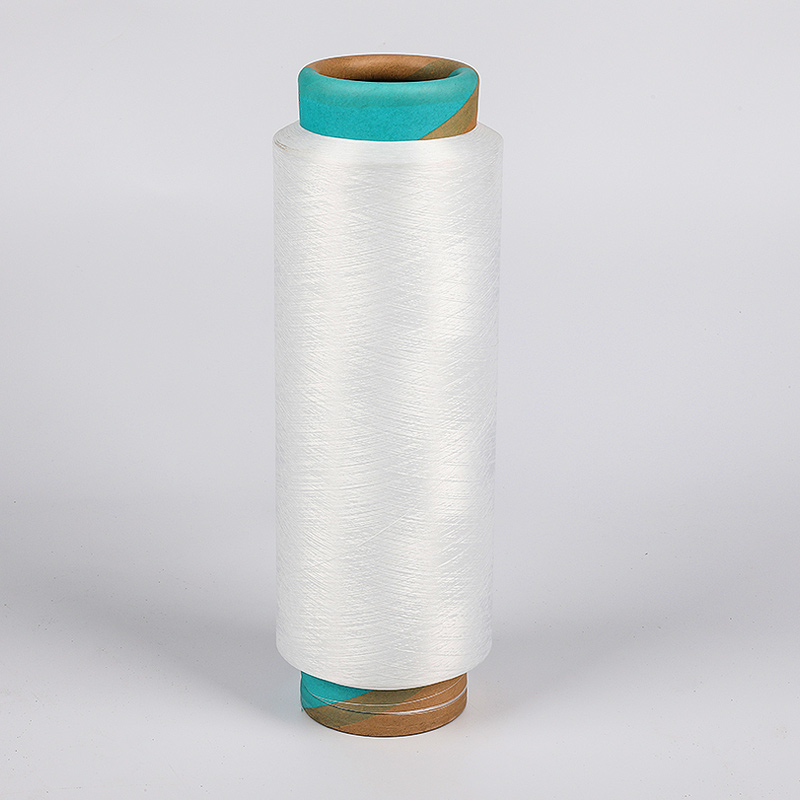
Recycled polyester yarn produced from sorted plastic bottle flake.
Global demand for recycled fiber has climbed steadily over the past decade as brand-level sustainability commitments moved from marketing statements into binding procurement targets. Industry associations tracking fiber production have reported that recycled polyester now represents a meaningfully larger share of total polyester output than it did ten years ago, driven mainly by bottle collection infrastructure improving in several manufacturing regions.
Illustrative Adoption Trend of Recycled Polyester in Bulk Orders
When sourcing recycled yarn for a program with a sustainability claim attached, request the specific certification chain of custody the mill holds rather than accepting a general statement that the yarn is recycled. Certification schemes differ in whether they verify only the recycled content percentage or also track social and environmental compliance through the full processing chain. A buyer who needs to make a public sustainability claim should confirm the certificate covers the exact production lot, not just the mill's general capability.
Color consistency is the most common quality complaint with recycled yarn. Because recycled flake can carry slight color variation between batches, ask the mill how they blend flake lots before extrusion and whether they run inline color measurement. A mill that blends multiple flake lots in a large silo before extrusion will generally deliver more consistent color across a bulk order than one that runs flake in small, unblended batches.
Mechanical testing for recycled yarn should include intrinsic viscosity checks in addition to the standard denier and tenacity tests applied to virgin polyester. Intrinsic viscosity drops slightly with each recycling cycle, and a mill that does not monitor this figure lot by lot risks shipping yarn with weaker tenacity than the specification sheet implies, even when the denier measurement itself looks correct on paper.
Evaluating a Yarn Manufacturer: Capability Checklist
Once the product specification is settled, the remaining risk sits entirely with supplier capability. A structured evaluation avoids relying on a single factory tour or a polished sample card. The table below outlines the core categories worth verifying before placing a first bulk order.
| Category | What to Verify | Why It Matters |
|---|---|---|
| Extrusion Ownership | Direct spinning lines vs outsourced | Controls lead time and cost stability |
| Lot Traceability | Batch records tied to raw material source | Needed for quality claims and recalls |
| Testing Equipment | In-house denier, tenacity, and elongation testing | Reduces dependence on third-party labs |
| Dye Compatibility | Uniform dye uptake across lots | Prevents shade variation in finished fabric |
| Order Flexibility | Minimum order quantity per color and denier | Affects working capital and inventory risk |
Capability Comparison: Integrated Mill vs Trading-Only Supplier
Solid area represents an integrated spinning and texturing mill; smaller inner area represents a trading-only supplier without in-house production.
Direct from manufacturer yarn sourcing generally scores higher on traceability and price control because there is no intermediary margin or communication delay between the production floor and the buyer. A trading-only supplier can still be a reasonable partner for smaller, less specification-sensitive orders, but buyers running programs with strict shade or performance tolerances should weight integrated production capability heavily in their scoring.
An on-site or third-party audit remains the most reliable way to confirm the claims made on a capability checklist. Photographs and self-reported figures can be accurate, but only a physical or video walkthrough of the extrusion floor, the texturing hall, and the testing lab confirms that the equipment listed in a supplier profile actually exists and is currently operating. For buyers unable to travel, a live video audit conducted by the buyer's own team, rather than a recording provided by the supplier, closes most of that verification gap.
Sourcing Workflow: From Inquiry to Bulk Order
A disciplined sourcing sequence prevents the two most common failures in bulk yarn procurement: ordering the wrong specification and discovering capacity constraints only after a deposit has been paid. The sequence below reflects a workflow that experienced buyers in textile manufacturing factory sourcing typically follow.
The trial order stage is the one most often skipped by buyers under deadline pressure, and it is the stage that catches the majority of avoidable defects. A trial order of a few hundred kilograms, run through the buyer's own knitting or weaving equipment, reveals problems that a supplier's own lab report will not show, such as tension inconsistency during unwinding or subtle dye lot variation that only becomes visible after finishing.
Payment terms should scale with trust built through this workflow. A first trial order paid in full up front is reasonable. A bulk order for an OEM yarn manufacturer relationship expected to run for multiple seasons should move toward partial deposit with balance against shipping documents, which protects both sides once a track record exists.
Documentation to Keep at Each Stage
Every stage of this workflow should leave a paper trail. The specification sheet, the lab report from the trial order, photographs of the fabric run test, and the final bulk order confirmation together form a reference file that resolves most disputes without argument. Buyers who skip this documentation habit often find themselves relying on memory or informal chat messages when a quality issue surfaces months later, which weakens their position considerably compared to a supplier who kept organized records throughout.
Cost Structure and MOQ Considerations for Bulk Polyester Yarn Suppliers
Polyester yarn pricing tracks polymer chip cost closely, but chip cost alone does not explain the spread between quotes from different suppliers. Energy cost, texturing machine utilization, and dye lot minimums all add layers on top of raw material cost, and those layers vary more between suppliers than raw material cost does, since most mills in a given region buy chip from a similar pool of petrochemical producers.
Illustrative Cost Breakdown for Bulk Polyester Yarn Suppliers
Minimum order quantity is negotiated per color and per denier, not as a single blanket figure across a supplier's whole catalog. A mill may accept a low minimum for a stock color already running on a texturing line, while a custom color requiring a dedicated dye lot can carry a minimum several times higher because the dye kitchen and machine changeover cost is fixed regardless of order size. Buyers evaluating bulk polyester yarn suppliers should always ask for minimums broken out by color category, standard versus custom, rather than accepting a single number that only applies to the easiest case.
Freight terms also shift the effective landed cost more than buyers often expect. A quote priced ex-works looks lower on paper than a quote priced with freight included, but the ex-works quote shifts logistics coordination and freight rate risk onto the buyer. For a first order with an unfamiliar supplier, a freight-included quote simplifies comparison even if the headline number appears higher, because it removes a variable the buyer cannot easily verify in advance.
Currency exposure adds a further layer many buyers overlook until an order spans several months between quote and delivery. A quote fixed in the supplier's local currency can shift meaningfully in the buyer's home currency if exchange rates move during production and shipping. Agreeing on the invoicing currency and, for larger orders, discussing whether the price is fixed or subject to a raw material index adjustment, avoids a dispute over who absorbs a swing that neither side directly caused.
Common Pitfalls When Selecting an OEM Yarn Manufacturer
The most frequent and expensive mistake is treating denier and filament count as interchangeable across suppliers without independently verifying the physical yarn against the specification sheet. Two mills can both list 150D/48F on paper while producing yarn with measurably different actual denier, because tolerance ranges differ between mills and some suppliers round loosely toward the nominal figure.
- Skipping third-party lab verification on the first shipment of a new supplier relationship
- Accepting verbal capacity claims without a documented production schedule
- Assuming a low unit price includes the same packaging and cone weight as a competing quote
- Overlooking shrinkage rate differences between conventional and recycled feedstock yarn
- Failing to lock a color standard sample that both sides sign off on before bulk dyeing
Packaging specification is an underrated variable. Cone weight, winding tension, and traverse pattern all affect how smoothly yarn unwinds on downstream knitting or weaving machinery. A supplier switching cone weight from one order to the next, even with identical yarn inside, can cause unexpected tension problems on a buyer's equipment. Locking packaging specification in the purchase order, not just the yarn specification, avoids this class of problem entirely.
Finally, buyers should be cautious of suppliers unwilling to share a documented complaint resolution process. A mill confident in its own quality control will typically have a clear, written procedure for handling out-of-tolerance shipments, including retest protocols and compensation terms. The absence of such a document, or vague verbal reassurance in its place, is a reliable early signal of how disputes will actually be handled once a real quality issue occurs.
Communication cadence during production is another underrated factor. A supplier who proactively sends progress updates at each major milestone, from extrusion through winding to packing, gives a buyer time to react to a delay before it becomes a shipping crisis. A supplier who only responds when contacted, and only with brief confirmations, forces the buyer into a reactive posture that makes it much harder to plan around any slippage in the schedule.
Frequently Asked Questions
Q1: What is the practical difference between polyester DTY and polyester POY for a buyer with no texturing equipment?
A buyer without texturing equipment should specify drawn textured yarn directly, since partially oriented yarn requires further processing before it can be knitted or woven and cannot be used as-is on standard fabric formation machinery.
Q2: How do I confirm a supplier's recycled content claim is accurate?
Request the certification body name, certificate number, and the specific production lot the certificate covers, then verify the certificate status directly with the issuing body rather than relying solely on a document provided by the supplier.
Q3: What is a reasonable minimum order quantity to expect for a custom color?
Custom colors typically carry a higher minimum than stock colors because of dedicated dye lot and machine changeover costs, so buyers should request the minimum broken out by color category rather than assuming one blanket figure applies.
Q4: Should I always choose the supplier with in-house extrusion over a trading company?
Integrated production generally offers better traceability and price stability for specification-sensitive programs, but a trading-only supplier can still suit smaller or less demanding orders where flexibility matters more than deep process control.
Q5: How large should a trial order be before committing to a bulk order?
A trial order large enough to run through the buyer's actual production equipment, rather than a small hand sample, gives the most reliable signal of how the yarn will perform once scaled to a full bulk order.
Q6: What packaging details should be locked into a purchase order?
Cone weight, winding tension, and traverse pattern should all be specified in writing, since changes to any of these between orders can create unwinding and tension problems on downstream machinery even when the yarn itself is unchanged.

 TEL: +86-575-85510907
 E-mail:
 Qianqing Material Market, Shaoxing,Zhejiang Province,China
